The ITS Strategic Plan 2021–2025 highlights that its success depends on international prospects, especially emerging markets and attracting international students. KA1 mobilities have an essential role for ITS in enabling staff exchanges that foster collaboration, identify challenges and opportunities, and support academic and business prospects. Erasmus+ has a pivotal role in this process, promoting a diverse, multicultural environment within ITS.
The ITS Strategic Plan outlines two internationalisation strategies: [1] availability of international staff and [2] provision of transnational education. Beyond its educational mission, ITS is committed to its social role, as defined in the Strategic Plan, through inclusive internationalisation. ITS staff members have also contributed to projects in underprivileged communities worldwide. Partner countries were therefore chosen not only for strategic reasons but also to address various barriers: [1] geographical (e.g. Tajikistan, Mauritius), [2] socio-cultural (e.g. Togo), [3] social (e.g. Armenia, Georgia, Jordan, Tunisia, Montenegro), [4] educational (e.g. Morocco), and [5] economic (e.g. Libya).
Montenegro
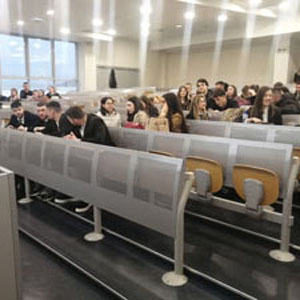
A staff teaching mobility was held in Montenegro at Universitet Donja Gorica, Podgorica, focusing on “Features of sustainable agro-ecosystem-based rural tourism and bespoke tour guiding.”
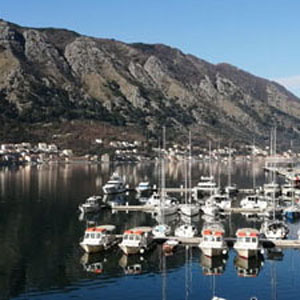
Montenegro, known for its natural beauty and cultural richness, holds strong tourism potential but faces logistical and human resource challenges. While tourism mainly benefits urban centres, niche forms such as agri-tourism can positively impact rural communities. Their relatively low start-up costs make them accessible to local populations, though they are often more vulnerable than mainstream tourism. This fragility can be reduced through education, training, and community outreach.
During the mobility, participants co-developed a framework for sustainable niche tourism and discussed its practical implementation from local perspectives. These insights will inform the adaptation or creation of related modules at ITS in Malta. Local university staff supported field visits to enhance the hands-on learning experience and ensure maximum educational value. The Erasmus+ thematic areas addressed included:
- [i] Teacher training and subject specialisation
- [ii] Interdisciplinary education programmes
- [iii] Language teaching
Armenia
A staff teaching mobility was organised in Armenia, at the Goris State University, Goris, and having a focus on: ‘Developing culture-appropriate pedagogical practices to promote equity in the classroom by reducing pedagogical dissonance via use of explicit and implicit approaches’. Goris State University offers tourism management and the use of quality English in its expanding need for internationalisation. Partnering and developing ties with ITS was therefore felt to be important because through this mobility opportunities to develop aspects of business English, academic English and tourism. Specifically, in this first mobility, the development of culturally adaptive pedagogical practices for greater efficiency and equity via the training proposed by ITS visiting staff. This training need is not only present in Goris, but ITS also benefited by adding to our international portfolio culturally adaptive pedagogical strategies with a focus on explicit and implicit teaching and how this may target different learner-types and be used for creating equity and equal opportunity in the classroom, exchanging knowledge and best practices. The ERASMUS+ thematic focus of the mobility and the reciprocal shared knowledge and experiences, based on sustainable agritourism and ecotourism included: [i] teacher training with subject specialization [ii] education, inter-disciplinary programs.
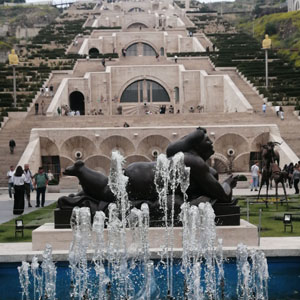
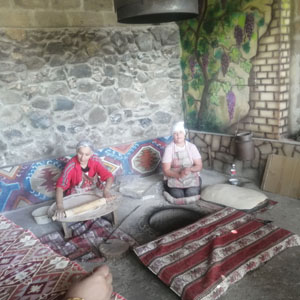
Two staff mobilities were organised in Armenia, at the Eurasia International University, Yerevan. The mobility with a focus on ‘Food tourism and sustainable agroecosystem-based rural tourism' allowed for the development of a framework for specific niche tourism products, outlined and interactively explored with local perspectives stemming from the trainees. This university partner provides education on the three levels of National Qualification Framework of the Republic of Armenia: Bachelor’s (level 6), Master’s (level 7), Researcher (Scientific Degree Candidate of Science (level 8)). The specialisations at the Master’s level include Hospitality Management as the potential of tourism in Armenia is being recognised internationally. However, there is no tourism focus. The purpose of this mobility was to explore niche tourism, and sharing of the training expertise from ITS, namely in agritourism and promote Armenia as a food tourism destination. The other mobility with a focus on: ‘Developing rural communities through ecotourism, cultural -tourism and religious tourism - exploring tourism synergies ’ further aligns with the international recognition of the potential of niche tourism in Armenia, and specifically, cultural, religious and ecotourism were concurrently explored in this mobility to help promote Armenia as a diverse and specialised destination offering a unique combination of historical and cultural artefacts and sites nestled in a stunning and unspoilt natural landscape. Workshops and brainstorming session to share and discuss good practices for sustainable niche tourism and on-site niche tourism visits were done, in addition to lecture-style training.
Georgia
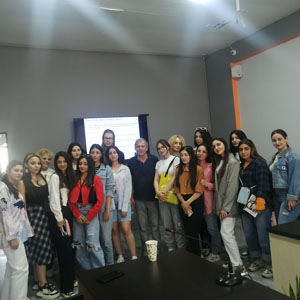
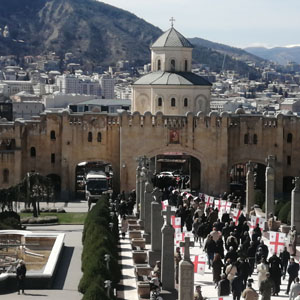
A staff teaching mobility was organised in Georgia, at the Caucasus University, Tbilisi, and having a focus on: ‘Features of sustainable agri-tourism and developing a corresponding course for tour-guides in rural areas’. Caucasus University has a Tourism School that is expanding and diversifying its curriculum and is interested in niche tourism. The potential of tourism in Georgia is being recognized internationally. However, there is no tourism focus on niche tourism across much of the country, resulting in HR shortage in these specific sectors such as agritourism development and appropriate specialized tour-guides. The purpose of this mobility was to explore this skills and knowledge gap in Georgia [and the region] via our university partners, and share ITS training expertise in agritourism, and help develop an outline for a bespoke tour-guide training course. Training activities included: [1] lecture-style theory-based training [2] interactive workshops and brainstorming sessions for integration of local perspectives with theory [3] field visits to extrapolate theory to practice. This mobility was part of a broader interrelated project that explorer eco-tourism, cultural -tourism and religious tourism [Armenia] and agritourism [Armenia, Georgia] with the explicit purpose of sharing information and results with Erasmus partners across the Caspian region [Tajikistan and Uzbekistan] and beyond [Tunisia, Sudan and Montenegro]. Outlining of in-situ best practices for niche tourism including bespoke tour- guiding and sustainability aspects of agricultural practices, agricultural and animal husbandry genetical resources, rural society preservation including their agricultural practices and agrarian landscapes, areas of ecological importance and natural beauty and rural architecture and heritage sites
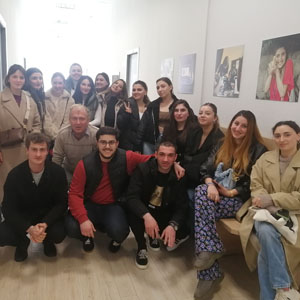
A staff teaching mobility was organised in Georgia, at the Ilia State University, Tbilisi, and having a focus on: ‘Developing culture-appropriate pedagogical practices to promote equity in the classroom by reducing pedagogical dissonance via use of inductive versus deductive approaches’. Ilia State University offers a Master of Special Education for qualified special teachers, who benefited from the ideas and expertise exchanged in this mobility by helping to provide the comfortable environment for students with disabilities and challenges for learning. A special focus of the program is to equip masters students with theoretical knowledge and practical experience by familiarizing them with effective methods and strategies to teach challenged students. This can allow them to work as a counsellor in the discipline areas of special and inclusive education, as a school coordinator and educational organizations. There is, however, a need for knowledge and strategies for ‘additional needs’ students as most of the available literature and pedagogical practices focus on special needs learners. This knowledge gap started to be addressed through training from the visiting ITS personnel and via this mobility; helping in reducing pedagogical dissonance via the understanding and application of inductive or deductive approaches. Training activities also included class observation and evaluation of the range and frequency of pedagogical practices that reduce dissonance, namely judicious use of inductive and deductive approaches and workshops and brainstorming session to share and discuss good practices for pedagogy in intercultural educational scenarios.
Morocco
A staff teaching mobility was organised in Morocco, at the Ibn Zohr University. Agadir, and having a focus on: ‘Setting up a framework for developing a botanic base for use in Mediterranean urban greening and landscaping’. Agadir has a Mediterranean climate and vegetation but that also tends, in parts, towards being slightly hotter and drier – a climatic projection of where Malta is already heading. This mobility has helped in the understanding of this ecosystem and its botanic components, together with suitability-analysis for urban planting. It has also set the foundation for the creation of an evidence-based rationale with which urban greening and landscaping, with a low carbon footprint, can be planned. This has commenced by gradually building-up a suitable low-irrigation plant-base for urban greening with the help of the Faculty of Sciences and partnering forest Engineer, and GIS and Remote Sensing Expert. It is expected that future mobilities in 2025-2027 should start to generate important information about sustainable greening practices useful for Mediterranean climate urban areas, affecting locals and visiting tourists alike. The Mediterranean including countries like Malta and Morocco have developed touristic industries and these are an important economic pillar. Workshops and brainstorming session and field visits; for a more hands-on perspective, supplanted the standard lecture-style presentations.
Tunisia
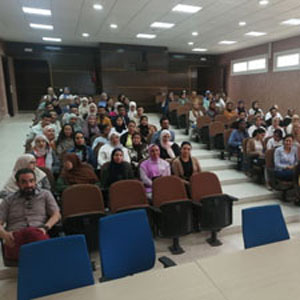
Two staff teaching mobilities were organised in Tunisia, at Sfax University , Sfax. The first mobility with a focus on: ‘Challenges and opportunities associated with urban architecture and design and inclusion of greenery in soft landscaping for Mediterranean urban greening and landscaping’. This mobility has generated important information about sustainable greening practices useful for Mediterranean climate urban areas, affecting locals and visiting tourists alike. Countries like Malta and Tunisia have a developed tourism industry and this is an important economic pillar for both countries. With its focus on architecture and urban planning Sfax University has the right environment to facilitate the development of ideas stemming from this mobility, and the city is a dynamic and expanding urban centre that has a major economic and commercial role in Tunisia. Recently, the city was attempting to reverse the industrially degraded parts of the city and environs, and the focus of this mobility had an important role in understanding such issues and generating dialogue and idea-exchange. Arguably this concern is also relevant for the densely populated Maltese Islands and there has been a commitment between the two institutions to have several other mobilities to continue these perspectives. These are currently in progress. The second completed mobility had the following focus: ‘Developing culture-appropriate pedagogical practices to promote equity in the classroom by reducing pedagogical dissonance via use of implicit and explicit approaches’. The city of Sfax is a business- and education-oriented centre and synchronized with its socio-economic environment and contributes significantly to diversifying the region's economic fabric. The international business environment of this Governate requires the use of quality English in its expanding need for internationalization and developing aspects of business English, academic English and tourism. This mobility aims to initiate training of university staff to develop better and varied pedagogy for greater efficiency when teaching, while the university generally uses explicit teaching, the use of implicit teaching was demonstrated during this mobility and how this could facilitate critical thinking, rather than merely rote learning.
A staff teaching mobility was organised in Tunisia, at the Ecole Supérieure d’ Agriculture du Kef, Université de Jendouba, in Le Kef, and having a focus on: ‘Agritourism and safeguarding animal genetic resources and rural lifestyle'. This mobility therefore focused on agriculture and animal husbandry in the rural agriculture northwestern part of Tunisia, an area that does not benefit from the tourism income of the coastal areas. Introducing agritourism here is seen as a way of creating an additional source of revenue in these rural areas but also help safeguard traditional locality-specific animal genetic resources [sheep, goats, cattle, poultry etc]. In addition to being part of the rural landscape and heritage, domestic animals give added value to visitors by experiencing locally-unique animals and sample gastronomic specialities from them, such as local cheeses The transition from agriculture and animal husbandry to a holistic agritourism product was seen as a viable possibility in this outlying area of Tunisia that as yet has relatively few visitors; it is an area of great natural beauty and tradition that may be showcased via agritourism, and ITS delivered many technical points on sustainable rural tourism with agriculture as its focus. Workshops and brainstorming session and field visits; for a more hands-on perspective, supplanted the standard lecture-style presentations.
Jordan
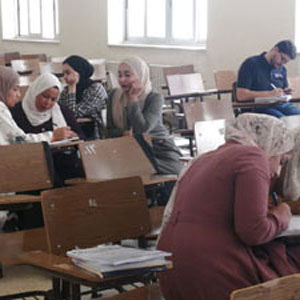
Two staff teaching mobilities were organised in Jordan. The first mobility at Tafila Technical University Jordan had the focus on the 'Use of varied pedagogical practices to facilitate teaching-learning in the classroom according to learner-type profile and preferences via use of inductive versus deductive approaches’. The substantial number of students with additional needs [as opposed to special needs] may have their learning impediments lessened and even eliminated by varying the pedagogical strategy used in accordance with their intrinsic learning-style preferences. The teaching staff clearly benefited from this, and some of the attending administration staff also found it useful to better cooperate with teaching staff. In addition, opportunities for writing information may also benefit on learning how to present information [written reports or presentations] via both approaches according to their audience. The second mobility had as a focus: ‘Scuba diving tourism system: Developing a framework for collaborative management and sustainability’, in Aqaba. Aqaba hosts one of the northernmost coral reefs with marked biodiversity that is threatened by overtourism. This mobility aimed to create an initial basis for a conceptual model for a scuba diving tourism system (SDTS) that takes a holistic view and that can be used to underscore central elements of scuba diving tourism (SDT). Specifically, finding key components and possible issues challenging SDT and its sustainability was a major objective, referring primarily to damage diving tourism may cause, but also included a focus on scuba divers, the marine environment, the host community and the scuba diving tourism industry (including all associated industries), key elements of the SDTS and stakeholders in the management and sustainability of SDT, and academics (Aqaba University College).
Libya
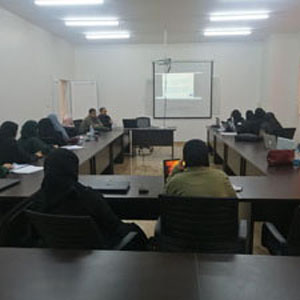
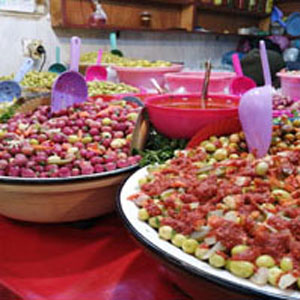
A staff teaching mobility was organised in Libya, at the University of Misurata, in Misurata, and having a focus on: ‘Review and in-situ application of COVID-19 mitigation recommended measures (RMs) needed in restaurants and food-related outlets’. These measures had not have been well-circulated in Libya, due to the previous and ongoing insurgencies during to the civil war. Interactive discussion and on-site visits, together with a review of needed measures are the primary focus of this mobility. Therefore, the visiting ITS epidemiologist on-mobility mobility delivered prepared COVID-10 documents. In addition, together with access to restaurants and canteens, resulted in a hands-on, pragmatic aspect to the training course. Libyan-specific challenges for implementation and monitoring of preventative measures were identified and applied to the more generic body of information, giving a unique local perspective. In addition to lecture-style theory-based training for up-do-date knowledge and associated skills and competencies needed for and application on mobility topics, workshops and brainstorming sessions for integration of local perspectives with theory, field visits to extrapolate theory to practice were also carried-out.
Tajikistan
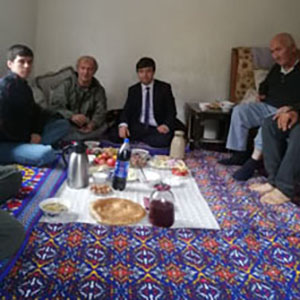
A staff teaching mobility was organised in Tajikistan, at the Tajik Agrarian University, in Dushanbe, and having a focus on: ‘Analysis and implementation of sustainable agri-ecosystem- based rural tourism’. Together with the Faculty of Agribusiness, this mobility identified appropriate enterprises that could form part of a niche tourism product. Hands-on visits helped capture an overview of local business potential and needs and conduct a pilot market analysis. This was followed by building out an operation and management plan. Identifying a marketing strategy and developing the corresponding financial strategy was also outlined. The thematic focus was on [i] teacher training with subject specialization, and [ii] education, inter-disciplinary programs.
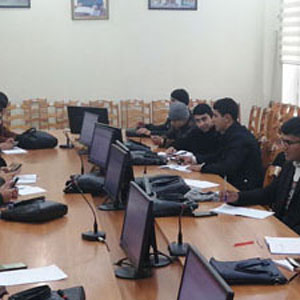
Another staff teaching mobility was organised in Tajikistan, at the Institute of Economy and Trade of Tajik State University of Commerce, IET TSUC, Khujand, and having a focus on: 'Use of varied pedagogical practices to facilitate teaching-learning in the classroom according to learner-type profile and preferences via use of field-dependent and field independent approaches’ with a context of efficient Business English training. The thematic focus was on: [i] teacher training with subject specialization, and [ii] language/pedagogical training. Specifically, issues on inclusion and equity and teaching efficiency and how these were ameliorated by varying the pedagogical strategy, used in accordance with learners’ intrinsic learning-style preferences, were explored via theory and practice sessions. Both teaching and administration staff benefited from this also in terms of organizing future in-house continued professional development.
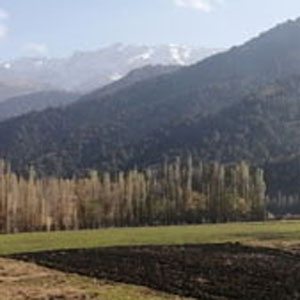
These two mobilities addressed the possible lack of equity for people in rural and urban areas in Tajikistan, and the susceptibility of such communities to lag in being able to participate and fully benefit the success of their county’s economic growth being a risk. Tourism often benefits central urban areas, but niche tourism may favourably impact rural, outlying areas. Moreover, start-up cost may be significantly modest, favouring a wide swathe of locals to become involved. However, niche tourism is often less robust than mainstream tourism, but this fragility can be mitigated via education and outreach. In this project we have liaised with two universities in the western & northern parts of Tajikistan, an area with great natural beauty, traditional culture and tourism potential, yet facing logistical challenges. In addition to sustainable rural tourism, a way to meet the need for equity and inclusion in the classroom, particularly for emarginated rural communities to have equal opportunities for education via appropriate pedagogical strategies was advocated.
Mauritius
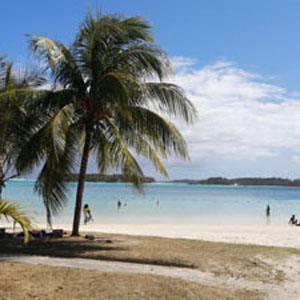
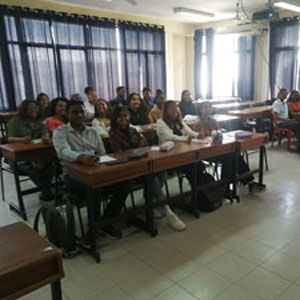
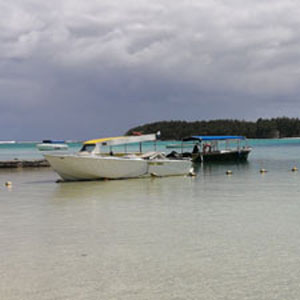
A staff teaching mobility was organised in Mauritius at the University of Mauritius, in Rosehill with a focus on the ‘Impact of COVID-19 on restaurants and canteens and identification of critical control points (CPPs) along the food transformation chain via hazard analysis (HA) against COVID19 contamination and transmission using simulated transmission and detection’. Lecture-style delivery of COVID-10 documents prepared by the visiting ITS epidemiologist helped develop and have interactive discussions in the training course. In addition, workshops and on-site visits helped give the mobility a more meaningful perspective due to the hands-on nature of establishing CCPs accordingly. Mauritius is a small island nation like Malta where tourism is also a major pillar of our economy. Similarly to Malta, tourism has been substantially negatively impacted by the COVID-19 pandemic. The importance of exploring practical strategies and rapid tests for easy detection of contaminated surfaces within the catering industry needs to be pursued to mitigate the impact of any form of pandemic, but also to help restore confidence to those investing in the travel and tourism sector. Training and sharing of information and experiences is therefore a clear mutual benefit of this mobility that should have a substantial impact, and to develop additional ties between the two island nations.
Togo
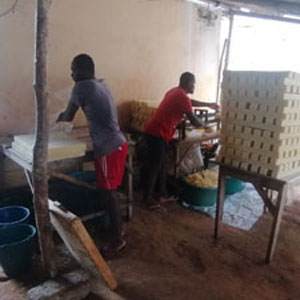
Two staff teaching mobilities were organised in Togo with the involvement of the Universite’ de Lome and their rural partner ‘Synergie d’Actions pour un Development Approprie’ (SADA). Staff training had a focus on ‘Artisan handicraft business: production for the tourist market’. This mobility primarily addresses lack of equity for women in Togo, and the vulnerability of women and teenagers in socially-disadvantaged neighbourhoods where otherwise they could possibly have to resort to degrading and humiliating ways of earning a living. We have liaised with a grass-roots level -provider of education and skills [SADA] that has an excellent network and experience with these target groups of learners. Therefore, via interactive on-site workshops in rural areas, learner-centred activities, arts and crafts products in Togo such as artisanal hand-crafted soaps, basketry, naturally died fabrics etc. were re/explored and studied for suitability and adaptation for up-market European tourists. The aim is to maintain alive Togolese traditions while making available quality local products and generating income for underprivileged women that approached the city-based university via its partner SADA for training purposes. The ITS trainer is conversant with the chemistry of soap making [saponification] and ‘fixing of dies’ in fabric [via mordants] that merged well with local ways of production - the fusion of ideas with local ones generated a lot of interest and possibilities. Learner-centred, hands-on pedagogical strategies were also ‘shadowed’ by academic staff. The staff teaching mobility had a focus on ‘Professional business presentations and writing’ [MQF/EQF 5]. An intensive two-week learner-centred course with theory and hands-on production of spoken and written English [for francophone Togolese staff and students was organized. Included were demo lessons given by the ITS trained with adult students which are ‘shadowed’ by the staff trainees and various pedagogical strategies were shown. The thematic focus was [i] teacher training with subject specialisation [ii] education, inter-disciplinary program [iii] language acquisition.